
The field keeps moving.
Stay in the conversation.
Research briefs, editorial perspectives, and developments across brain health technology. Sources and publication dates travel with the story.

Duke joins trial of months-long subscalp EEG monitoring
The 210-participant DETECT study is testing whether access to continuous EEG data changes clinical decisions after inconclusive conventional monitoring; results are not yet available.

Focused-ultrasound pilot tests a deep target for persistent delusions
A 10-person sham-controlled crossover pilot found an early delusion-rating signal after one targeted ultrasound session, with major replication and measurement questions still open.

NUS expands personalized brain-stimulation research after early OCD feasibility work
A Singapore team has opened a 30-person depression-and-anxiety study after two people completed an intensive imaging-guided OCD feasibility protocol.
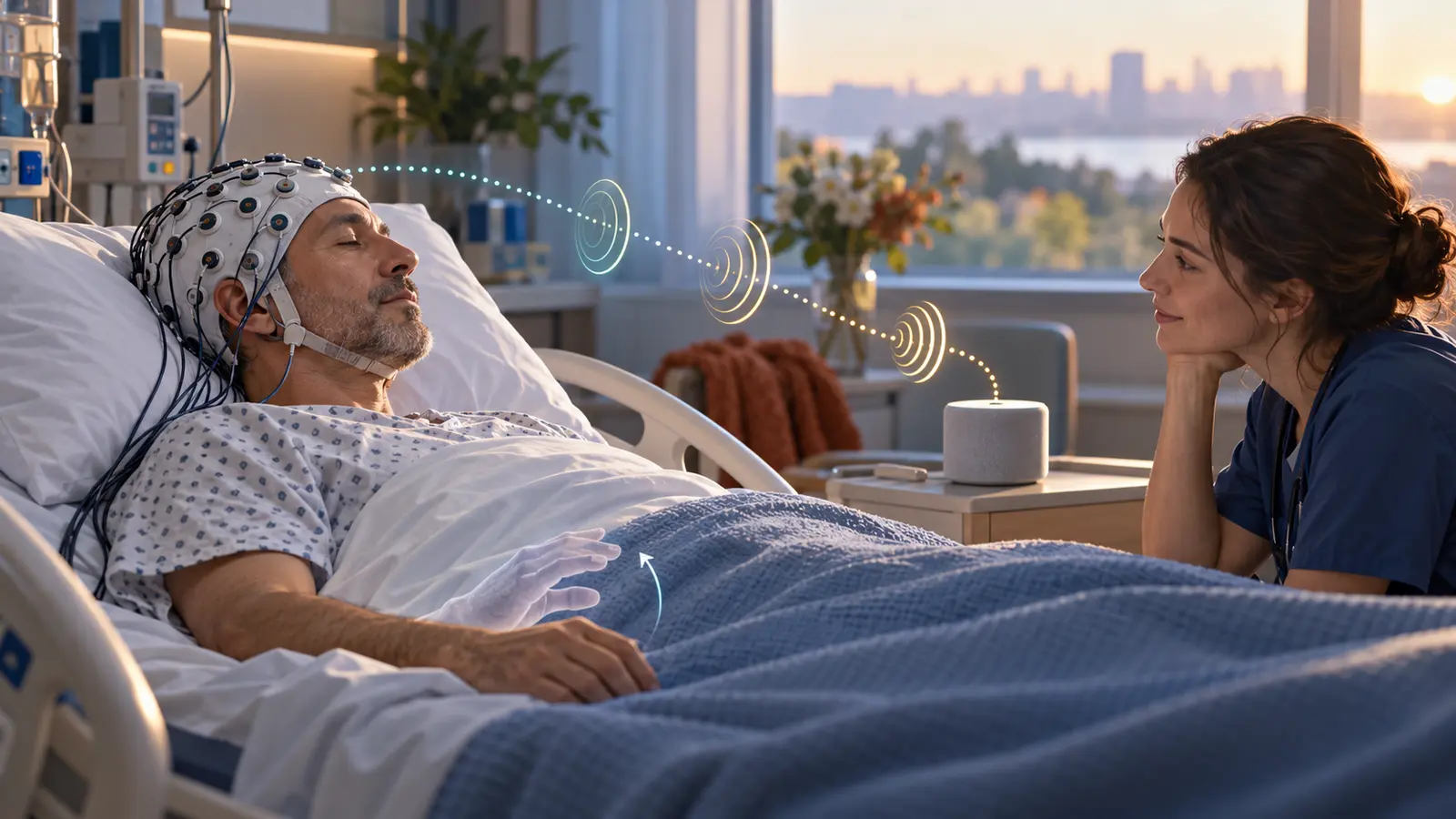
Bedside EEG interface offers an early communication step for unresponsive ICU patients
In a 41-patient acute-brain-injury cohort, 13 clinically unresponsive patients controlled a simple one-way interface by attempting a hand movement.

Multisite rTMS study tests a network-based approach in MCI
A 101-patient active-comparator study found larger short-term cognitive gains with sequential prefrontal and precuneus stimulation than with prefrontal stimulation alone.

tDCS pilot tests faster early change with written exposure therapy
A 25-person randomized pilot found earlier symptom improvement with active tDCS, while active and sham groups did not differ one month later.

Salience highlights single-day TMS case series for bipolar depression
A 30-person case series compresses 20 iTBS sessions into one day, offering a promising access idea that still needs randomized testing.

Universal Brain begins clinical ERP workflow pilot at Acacia
The first clinic deployment of the FDA-cleared UB ERP System will test how rapid EEG and ERP assessment fits alongside established psychiatric evaluation.

Umbrella review maps promising and uncertain PBM evidence
A review of 100 evidence syntheses finds encouraging condition-specific patterns alongside major quality and safety-reporting gaps.

UC San Diego trial will test VR neurofeedback for adolescent pain
A planned controlled study asks whether real-time EEG feedback adds value beyond an immersive virtual environment.
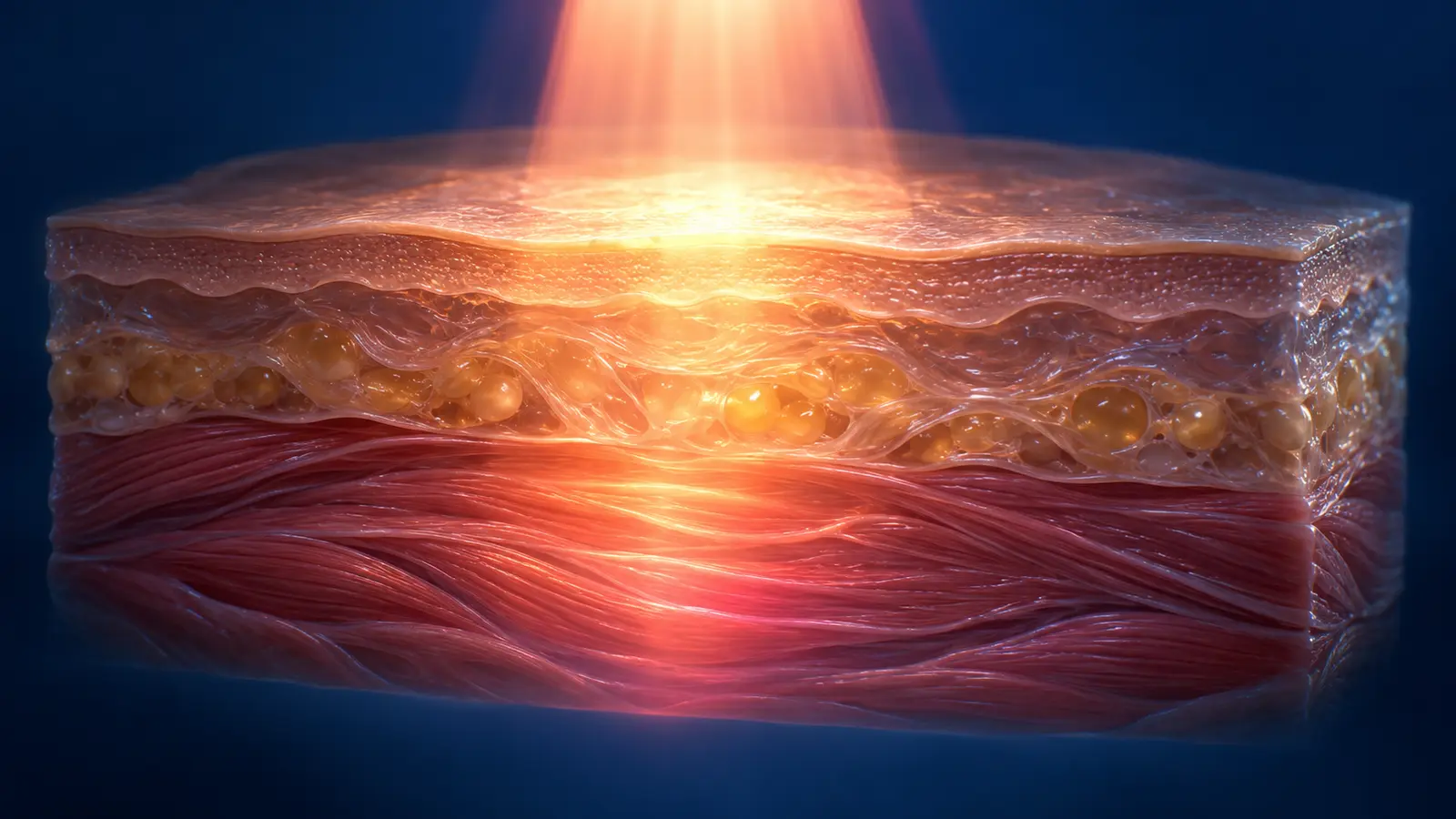
Photobiomodulation model shows why more power is not always better
A three-dimensional model couples light transport, tissue heating and an ATP-related response to clarify why PBM dose design must balance penetration with thermal load.

Real-time neurofeedback trains attention away from negative content in depression
A 48-person sham-controlled preprint found that feedback tied to each participant's own fMRI pattern reduced a task-specific negative-attention measure, without showing depression-symptom improvement.

Hair-anchored electrodes aim to make EEG more inclusive
A 17-person preprint reports that hairstyle-matched attachments improved scalp contact and signal quality for adults with Type 4 Afro-textured hair.

Refugee trauma-care study tracks neurofeedback and EEG change
A 53-person observational study found clinical improvement during multidisciplinary care that included neurofeedback, alongside selective alpha-EEG changes.

Graded neurofeedback study links motor intent with stroke rehabilitation
Four stroke survivors improved on movement and body-perception measures during adaptive training that scaled visual and sensory feedback to EEG motor-intent signals.

Pediatric headache review places biofeedback among promising non-drug options
A 16-trial network meta-analysis found favorable biofeedback estimates for headache frequency and intensity, while rating the evidence very uncertain.

Neck biofeedback pilot tests movement-guided training
A 20-person pilot found strong retention and promising within-group changes after four supervised feedback sessions, while leaving comparative efficacy for a larger trial.
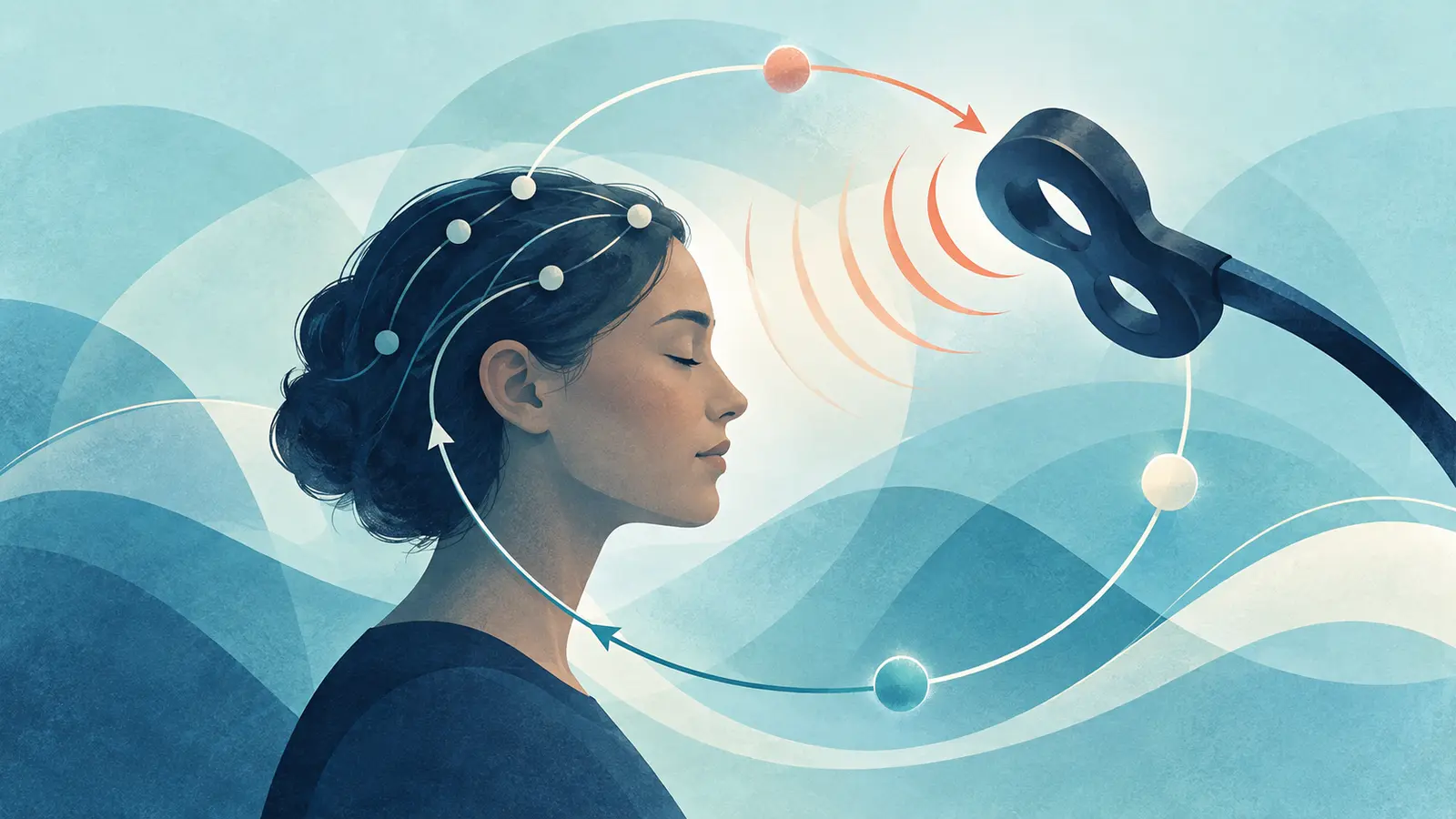
Adaptive EEG-TMS study lets reinforcement learning find individual timing
A 25-person physiology study shows that a closed-loop system can learn individual brain-state timing for TMS, an early step toward more adaptive stimulation research.
Infra-low-frequency neurofeedback study finds an exploratory network signal
A sham-controlled crossover experiment found a tentative beta-band network signal after one ILF neurofeedback session, with important multiplicity and generalizability limits.
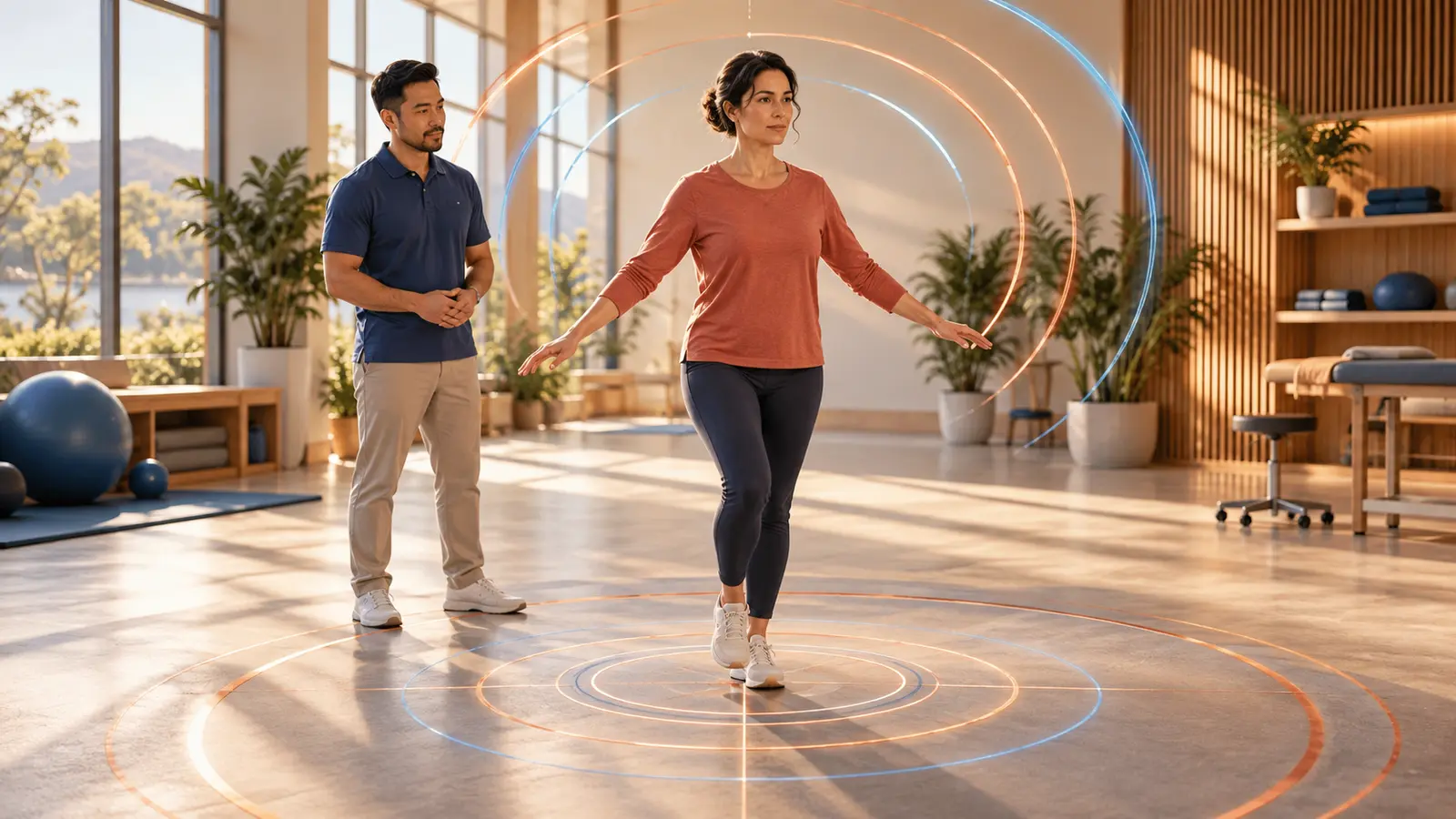
Randomized trial tests rTMS alongside vestibular rehabilitation for chronic dizziness
Adults receiving active 10-Hz rTMS alongside the same rehabilitation program as the sham group showed larger gains in dizziness and balance measures.

HITLAB and MiraWell plan an evidence-building step for XR biofeedback
A new partnership will evaluate an immersive biofeedback platform for pain and stress. Clinical outcomes have not yet been reported.

BrainMaster and Narbis bring neurofeedback beyond the computer screen
An ISNR 2026 presentation and the BrainMaster Edge Connector mark a collaboration focused on bringing feedback into everyday activities. Here is the documented timeline.

Divergence adds three HRV biofeedback training modes
The company announces RSA, low-frequency and coherence feedback options with session-level HRV measures.

Divergence announces Narbis EDGE lens-feedback integration
A vendor-announced integration adds changing lens tint as a feedback option for compatible mobile training workflows.

Stretchable interface aims for more reliable EEG through hair
A reusable research prototype combines an open stretchable mesh, liquid-metal connections and detachable hydrogel electrodes for repeated laboratory EEG and brain-computer-interface recordings.

iTBS pilot tests a five-session path for central poststroke pain
A 20-person randomized pilot found pain scores declined after five real motor-cortex iTBS sessions but not after sham, with important between-group and follow-up details still needed.

Real-time fMRI neurofeedback guides self-generated hippocampal control
Two experiments with 141 participants found that contingent feedback helped people learn mental strategies that increased activity in a targeted hippocampal region during one session.
Language models improve P300 speller performance in offline EEG study
An analysis of EEG data from 78 healthy adults found that language-model assistance increased simulated typing speed, while real-time testing in people with communication impairments remains essential.
EEG review finds promising cognitive-decline biomarkers, not yet ready for screening
A systematic review finds useful EEG research signals across subjective and mild cognitive decline, while evidence certainty remains very low for clinical screening or prognosis.

LORETA Z-score neurofeedback pilot tests an add-on to methadone treatment
A 30-person pilot compared LORETA Z-score neurofeedback, dot-probe training and methadone treatment alone, finding encouraging within-group signals but no robust between-group interaction.

Review finds promise for combining rTMS and mirror therapy after stroke
Seven randomized trials suggest that pairing rTMS with mirror therapy may improve upper-limb test scores, while protocol and evidence-quality questions remain.

Wearable EEG pipeline selectively targets artifact-contaminated segments
A 29-participant validation study tests a gated method that leaves cleaner EEG segments untouched and processes contaminated windows only when needed.
Structural-network study explores who may respond less to rTMS
A 204-person prospective cohort links two pretreatment network measures with poorer depression outcomes after rTMS.

40 Hz tACS trial tests temporal stimulation in Alzheimer's disease
A randomized trial reports encouraging cognitive and fNIRS findings, while attrition and limited abstract detail keep the result preliminary.
Auditory EEG neurofeedback case tests a sensory-adapted rehabilitation path
One postoperative case shows that auditory feedback can fit an intensive multimodal program when severe visual impairment makes conventional visual feedback impractical.

rTMS review finds promising cognitive-test results in mild cognitive impairment
A meta-analysis of randomized trials finds encouraging cognitive scores, while substantial heterogeneity and risk-of-bias concerns keep the clinical picture unsettled.

fNIRS model tests cortical versus subcortical stroke classification
A 175-participant study reports promising internal validation across rest and two tasks while leaving external clinical performance unanswered.
TMS interference study maps motor control of finger force
A small healthy-volunteer experiment uses brief stimulation as a perturbation to show when contralateral motor cortex supports precise force tracking.
Continuous pressure feedback improves position sense in robotic-thumb study
Behavioral and EEG results suggest that a continuous tactile signal may be easier to integrate than separated vibration cues.

Targeted 810-nm light study tests cognition and brain networks in Alzheimer's
A small sham-controlled trial links precisely placed near-infrared stimulation with short-term cognitive gains while showing why longer follow-up matters.

Real-time fMRS neurofeedback tests voluntary control of a brain-chemistry signal
A randomized proof-of-concept suggests healthy adults can learn to shift an MR spectroscopy measure of glutamate and glutamine with accurate feedback.

Longitudinal EEG study maps early speech-processing trajectories
Repeated recordings from infancy through the second year connect speech tracking with later verbal development while stopping short of a diagnostic claim.

EEG stroke study replicates signals linked with motor recovery
Repeated recordings in an independent rehabilitation cohort strengthen the case for studying EEG as a recovery marker.

ADHD brain-stimulation review finds promise with important variation
A 746-participant evidence synthesis identifies an encouraging pooled signal, while substantial inconsistency limits clinical conclusions.
EEG neurofeedback pilot explores upper-limb recovery after stroke
A seven-person controlled case series combined motor imagery, real or sham EEG feedback, and four weeks of physiotherapy.

7-Tesla biofeedback study targets motivation circuitry in depression
A 62-person randomized proof-of-principle trial found short-term active-versus-sham differences after high-field fMRI biofeedback.
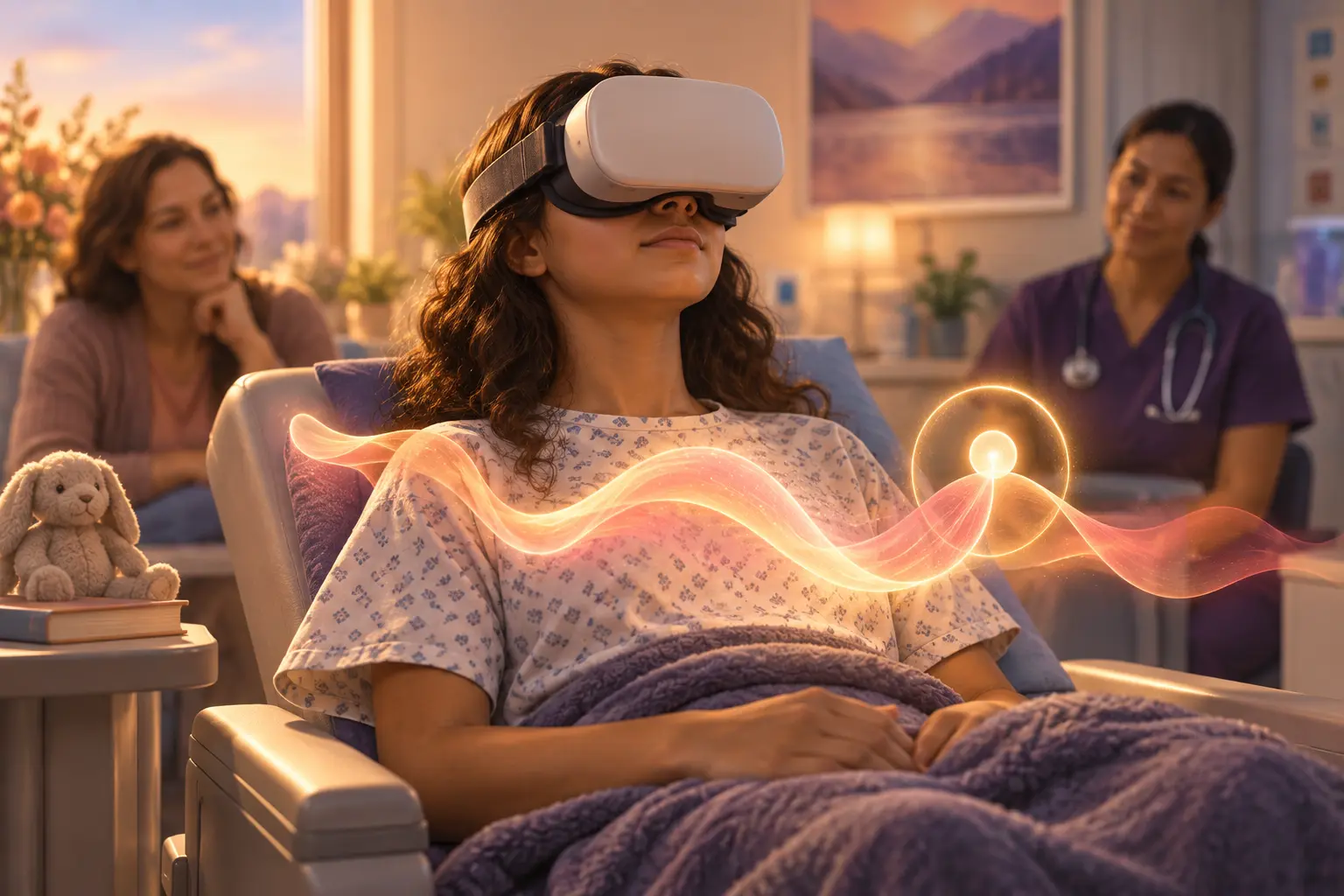
Biofeedback VR pilot tests practical use around pediatric surgery
A randomized pilot found respiratory biofeedback in virtual reality feasible and generally acceptable for adolescents undergoing surgery.

fNIRS study compares central and peripheral magnetic stimulation after stroke
A 57-person study found different immediate cortical response profiles after pulse-count-matched central and peripheral stimulation.

TMS-EEG framework targets the right network state, not just the right place
A new methodological review proposes timing stimulation to predefined, task-relevant network patterns measured in real time.
QEEG study maps symptom-linked spectral patterns in recent-onset schizophrenia
A preliminary 19-channel study found distinct frequency and regional associations with symptom dimensions in 18 people.

Neurofeedback proof-of-concept explores food-cue regulation in children
A small feasibility study tested ten food-cue EEG neurofeedback sessions for children with overweight or obesity.
Single-session rTMS study tests reach-to-grasp planning in Parkinson’s
A randomized study compared supplementary motor area, motor-cortex, combined and sham stimulation in 36 people.

Neurofeedback roadmap targets the next questions in FND research
A new opinion and review article maps how neurofeedback might be studied within multidisciplinary functional neurological disorder care.

Transcranial PBM study connects light, adenosine and sleep
A translational study combines cell work, mouse EEG experiments and a small randomized human trial to examine short-term sleep effects.
EEG error signals connect with basketball performance
A small observational study links responses to mistakes with fewer consecutive free-throw misses, opening questions for performance research.

Surface EMG makes muscle feedback visible in rehabilitation
A clinical review explores how real-time muscle feedback can support individualized practice and what limits its wider adoption.

Network meta-analysis compares non-drug cognitive approaches in Alzheimer’s
Across 50 trials, rTMS ranked highest on one cognitive scale, while dual-task training and tDCS led on two others.

TMS-EEG study finds candidate signal linked with suicidal ideation
A five-center analysis identifies a possible neurophysiological correlate, while leaving the essential validation work ahead.
PBM review explores pathways behind brain-network regulation
A new narrative review connects light-based research with cellular energy, blood supply and immune signaling.

HOPE prepares robotic TMS for clinical deployment
Staff training marks a practical adoption step for image-guided coil positioning, not a new proof of treatment benefit.

Northeastern launches neurofeedback research on knee pain
A five-year project will investigate whether EEG feedback can help people with amplified osteoarthritis pain.

Deep-rTMS trial reports greater depression-score improvement
A four-week sham-controlled trial also raises an exploratory question about triglycerides and treatment response.

fNIRS neurofeedback shows targeted stress regulation
A sham-controlled study found lower subjective stress, but not pain, after brief prefrontal neurofeedback training.
Real-time EEG improves phase-specific TMS precision
A prediction-free system timed TMS pulses to measured EEG phase with high precision across a broad frequency range.

Phase-timed sound shifts sleep waves and cerebrospinal fluid flow
A human experiment links precisely timed auditory stimulation with larger sleep slow waves and cerebrospinal-fluid movement.
Cleveland Clinic plans its next step for AI-assisted EEG
A new clinical interview explores how automated EEG analysis could support specialists and expand monitoring workflows.

Light and neurofeedback: new questions from two clinical cases
Reported gains in two adolescents offer a starting point for studying combined photobiomodulation and neurofeedback.

Reading the ADHD neurofeedback evidence with care
What a 2025 meta-analysis adds to the conversation about protocols, blinded outcomes, and individual response.
Modeling how light reaches brain tissue
Computational research explores two essential questions for transcranial light technology: penetration and tissue heating.

Inside the research on home-based photobiomodulation
A 2026 study examines light-based intervention for cognitive difficulties following COVID-19.