THE INTERSECTION OF BRAIN SCIENCE & HUMAN POTENTIALPartner with us
neurofeedback.com
The newsletter
Learning center / HistoryTHE PEOPLE BEHIND THE FIELD

A signal.
A question.
A century of discovery.

From Hans Berger's first human EEG to the many ways people have learned with feedback, this is a story of researchers, clinicians, inventors, and collaborators.

From recording to feedback

EEG records electrical activity. EEG neurofeedback returns information derived from that activity through sound, images, or another signal, giving a person an opportunity to learn with it. Its history grew through several traditions, with different signals, goals, and ways of training.

MILESTONES

How the field took shape

A selected history, beginning with human EEG and following its path into neurofeedback.

  1. 011924 / 1929

    Recording the human EEG

    Hans Berger records human brain electrical activity in Jena, then publishes his first report in 1929. These are two different milestones: recording and publication.

  2. 021934

    Independent confirmation

    Edgar Adrian and B. H. C. Matthews investigate the Berger rhythm, helping establish the human EEG as a reproducible physiological observation.

  3. 031960s

    From observing a rhythm to learning with it

    Kamiya studies alpha discrimination and feedback in people. Wyrwicka and Sterman demonstrate instrumental conditioning of a sensorimotor EEG pattern in cats, published in 1968.

  4. 041969

    A professional community forms

    The Biofeedback Research Society brings together investigators studying feedback and self-regulation. Barbara Brown helps organize its first meeting and becomes its first president.

  5. 051970s

    Attention, awareness, and self-regulation

    The Greens, Cade, and Fehmi explore connections among feedback, physiological regulation, and subjective experience. These overlapping traditions develop different models and training practices.

  6. 061972 / 1976

    Early clinical experiments

    Sterman and Friar report SMR feedback in a person with epilepsy. Lubar and Shouse later publish a preliminary study in a hyperkinetic child, extending the research toward attention and behavior.

  7. 071977

    A quantitative approach to EEG

    E. Roy John and colleagues publish Neurometrics, connecting quantitative electrical measurements with clinical questions. The work helps explain the assessment tradition that later develops alongside neurofeedback.

  8. 081980s–1990s

    Clinical practice and instruments evolve

    Ayers' clinical work and instrumentation influence the field. The Othmers enter neurofeedback in 1985 and develop computerized systems, clinical protocols, and professional education.

  9. 091984

    Exploring learning difficulties

    Tansey reports SMR feedback work involving children with learning difficulties, part of the early expansion into developmental and educational questions.

  10. 101994

    From scalp signals to estimated sources

    Pascual-Marqui, Michel, and Lehmann publish LORETA. Their method estimates distributed electrical sources from scalp EEG, helping establish tools later used in source-based approaches.

  11. 112003

    Testing transfer into skilled performance

    Egner and Gruzelier investigate slow-wave EEG training in relation to musical performance.

  12. 122005 / 2006

    Different approaches take shape

    Johnstone, Gunkelman, and Lunt propose EEG phenotypes for further investigation. Ochs publishes an account of LENS, documenting a distinct low-energy approach.

  13. 132010

    Live comparison with a reference database

    Collura and colleagues document clinical cases using live z-score feedback, combining multiple EEG comparisons into feedback.

  14. 142013

    An infra-low-frequency account

    The Othmers, David Kaiser, and John Putman publish an account of endogenous neuromodulation at infra-low frequencies, documenting a distinct clinical and theoretical branch of neurofeedback.

  15. 152014

    Neurofeedback and trauma-focused practice

    Fisher publishes a clinical book integrating neurofeedback with psychotherapy for developmental trauma.

  16. 162020 onward

    Making research easier to evaluate

    The CRED-nf consensus checklist sets out recommendations for study design and reporting, including control conditions and evidence of learning. The continuing task is to connect changes in a trained signal with meaningful outcomes.

PEOPLE & CONTRIBUTIONS

Meet the pioneers

Different paths into a shared field. These profiles highlight contributions and connections, without suggesting a single founder or a complete roll call.

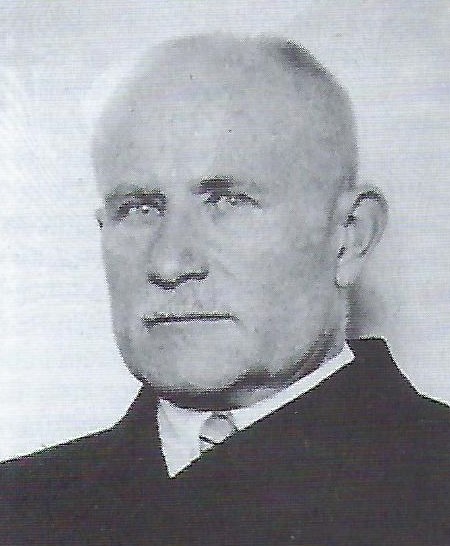
Historical black-and-white portrait of Hans Berger, circa 1930
Photograph source · CC BY-SA 3.0 DE
1920s · Human EEG

Hans Berger

Making the brain's electrical rhythms visible

Working in Jena, the psychiatrist Hans Berger recorded the human electroencephalogram in 1924 and published his first report in 1929. His recordings established a way to study electrical rhythms from the human head, opening a path for clinical EEG and, decades later, feedback based on those signals.

Contribution in context

Berger's achievement was measurement. Neurofeedback added a later step: returning information about a brain signal to the person producing it. The small waveform in this site's logo is traced from Figure 13 of his 1929 report.

1960s · Alpha feedback

Joe Kamiya

Connecting EEG feedback with subjective experience

Psychologist Joe Kamiya explored whether people could recognize when they were producing an EEG alpha rhythm and learn to change it with feedback. His experiments helped turn a recorded signal into information a person could use. They also connected neurofeedback's beginnings with questions about awareness and subjective experience.

Contribution in context

Kamiya's own historical account describes the progression from studying sleep and dreams to experiments in alpha discrimination and control. Learning to alter a signal and demonstrating a clinical benefit are separate research questions.

1960s–1970s · Sensorimotor rhythm

M. Barry Sterman

From learned EEG changes to epilepsy research

Neuroscientist M. Barry Sterman's work helped establish the sensorimotor rhythm, or SMR, as a target for feedback training. In a 1968 study with Wanda Wyrwicka, cats learned to produce more of a particular sensorimotor EEG pattern when it was rewarded. His subsequent work examined applications in people with epilepsy.

Contribution in context

Sterman and L. Friar's 1972 human report became an important early clinical milestone. Its single-person design belongs to the history of the research, rather than serving as a general estimate of treatment effectiveness.

1970s onward · Attention research

Joel F. Lubar

Bringing EEG feedback into attention research

Psychologist Joel Lubar helped establish neurofeedback research on attention and hyperactivity. His 1976 report with Margaret N. Shouse examined SMR feedback in a child described at the time as hyperkinetic, connecting EEG changes with observations in the laboratory and classroom.

Contribution in context

The report was preliminary and involved one child. Historical hyperkinesis terminology should not be equated with current ADHD definitions.

1980s onward · Clinical protocols

Susan “Sue” Othmer

Developing protocols through clinical practice

Sue Othmer brought a background in physics and neurobiology to clinical neurofeedback. Her family's experience with training in 1985 led to decades of work on protocols, clinical service, and practitioner education. At EEG Spectrum and later the EEG Institute, she helped develop the clinical approach associated with the Othmer name.

Contribution in context

Her later work with Siegfried Othmer included infra-low-frequency neurofeedback. The institute's biography documents her professional path; the authors' publications describe their approach and rationale.

1980s onward · Instrumentation & training

Siegfried Othmer

Linking engineering, clinical practice, and education

Trained in experimental physics, Siegfried Othmer became involved in computerized neurofeedback instrumentation in 1985. Alongside Sue Othmer, he worked on systems, professional training, and the development and explanation of clinical protocols. Their partnership linked technical development with observations from clinical practice.

Contribution in context

The Othmers' infra-low-frequency work represents one branch of neurofeedback's development. Their institutional accounts are useful first-party historical sources, while clinical claims require examination of the relevant studies.

1970s–1990s · Clinical practice & instruments

Margaret Ayers

Extending EEG feedback into clinical work

Margaret Ayers was an early private-practice neurofeedback practitioner whose work influenced later clinicians, including the Othmers. She also contributed to instrumentation: a US patent granted in 1990 names her as inventor of a neurofeedback apparatus for inhibiting and facilitating selected bioelectrical frequencies.

Contribution in context

Ayers' place in this story includes both practical equipment development and the transmission of ideas through clinical work. A patent documents an invention; it does not independently establish the clinical effects of a treatment.

1970s · Brainwaves & awareness

C. Maxwell Cade

Exploring patterns across states of awareness

British researcher C. Maxwell Cade connected biofeedback with the study of meditation and subjective awareness. With Geoffrey Blundell, he helped develop the Mind Mirror, an instrument for displaying activity across EEG frequency bands. His book The Awakened Mind, coauthored with Nona Coxhead in 1979, brought this approach to a wider readership.

Contribution in context

The “awakened mind” is the name used in this tradition for a proposed pattern of awareness and EEG activity. It is a historical model, rather than a universal diagnostic category or a single definition of an optimal brain.

1960s onward · Attention & feedback

Lester “Les” Fehmi

Making the way we attend part of the training

Psychologist Les Fehmi developed Open Focus, an approach concerned with how attention is directed and broadened. His work connected attention exercises with EEG biofeedback, including interest in relationships between signals recorded at different sites. He directed the Princeton Biofeedback Centre and taught these ideas through clinical work and professional presentations.

Contribution in context

Fehmi's attention-centered approach adds another strand to this history: the learner's experience during feedback matters alongside the signal being measured. His own publications explain the framework without making it interchangeable with every neurofeedback protocol.

1960s · Learning & physiology

Wanda Wyrwicka

A foundational collaborator in SMR conditioning

Physiologist Wanda Wyrwicka was first author of the 1968 study with Sterman on conditioning sensorimotor EEG spindles in waking cats. Their experiment linked a detected EEG pattern to a milk reward and examined how that pattern changed during training.

Contribution in context

Including Wyrwicka keeps a foundational experiment connected to its actual authors. It also reminds us that the development of neurofeedback depended on the science of learning as well as on recording technology.

1970s · SMR & behavior

Margaret N. Shouse

Coauthor of an early attention-training study

Margaret N. Shouse coauthored the 1976 SMR and hyperactivity report with Lubar. The publisher identifies it as part of her dissertation research. The study tracked EEG and behavior while changing the feedback contingencies.

Contribution in context

Her inclusion restores the collaborative history behind a paper frequently associated with Lubar alone.

1960s–1970s · A field takes shape

Barbara B. Brown

Building a community around biofeedback

Barbara Brown helped organize the 1969 meeting at which the Biofeedback Research Society was formed and became its first president. Her work helped bring researchers from different disciplines into a shared professional conversation. Through books such as New Mind, New Body, she also introduced biofeedback to readers outside the laboratory.

Contribution in context

Her contribution was scientific and organizational: a developing field needed places to exchange methods, question claims, and explain its possibilities to the public.

1960s–1970s · Psychophysiological self-regulation

Elmer & Alyce Green

Connecting biofeedback with self-regulation

At the Menninger Foundation, Elmer and Alyce Green explored learned regulation of bodily processes and states of awareness. Their work placed EEG alongside measures such as muscle tension and skin temperature. Their jointly authored Beyond Biofeedback connected experimental work with a broader interest in self-regulation and consciousness.

Contribution in context

The Greens help place neurofeedback within the wider biofeedback movement. Their historical and experiential writings should be distinguished from contemporary controlled evidence for a particular intervention.

1970s onward · Quantitative EEG

E. Roy John

Turning electrical recordings into quantitative comparisons

E. Roy John helped develop neurometrics, a quantitative approach to studying brain electrical activity. His 1977 Science paper, with Leslie Prichep and a wider research team, and his book on clinical quantitative electrophysiology helped establish a foundation for modern QEEG. This work brought measurement and comparison into a field traditionally centered on reading EEG traces.

Contribution in context

John's contribution helps explain the assessment tools later used alongside neurofeedback. Measuring an unusual EEG pattern and showing that training it improves a person's life are separate steps. Neurometrics was a collaborative program, including Prichep and numerous other investigators.

1990s onward · Electrical source estimation

Roberto D. Pascual-Marqui

Estimating where recorded brain signals may originate

Roberto D. Pascual-Marqui developed LORETA with Christoph M. Michel and Dietrich Lehmann. Their 1994 paper described a mathematical method for estimating distributed electrical sources from EEG measured at the scalp. His later work on the LORETA family helped extend the tools available for studying brain activity and informed source-based approaches to neurofeedback.

Contribution in context

Source estimation works backward from scalp measurements using a model and assumptions. Its maps are estimates, not direct pictures of activity inside the brain. The original method's deliberately low spatial resolution and its collaborators belong in the story, alongside later developments such as sLORETA and eLORETA.

1980s · Learning and SMR feedback

Michael A. Tansey

Exploring feedback in children with learning difficulties

Michael A. Tansey investigated sensorimotor rhythm, or SMR, biofeedback in children with learning difficulties. His 1984 report examined EEG training in relation to neurological features associated with learning. This work forms part of the early clinical expansion of neurofeedback beyond the initial laboratory and seizure research.

Contribution in context

These early reports helped generate questions about learning and development. Their historical role should be read alongside their study designs and the later need for controlled research; they do not establish that one training protocol will improve every child's learning.

2000s · Performance and cognition

John H. Gruzelier

Bringing neurofeedback into performance research

John H. Gruzelier explored neurofeedback in relation to cognition and skilled performance. With Tobias Egner, he investigated whether training slow-wave EEG activity could influence musical performance, reported in 2003. This extended the field's questions into what people could do after training.

Contribution in context

Their collaboration linked EEG learning with outcomes beyond the feedback session. Findings from a particular performance study need replication and do not establish a general enhancement effect.

2000s · Learning and transfer

Tobias Egner

Asking whether EEG training transfers into performance

Tobias Egner's early neurofeedback research with John Gruzelier included their 2003 musical-performance study. It connected the regulation of slow-wave EEG with an activity outside the training display, helping bring questions about learning and transfer into the field.

Contribution in context

Changing a measured signal and improving a real-world skill require separate evidence. This research offers a historical example of examining both.

2000s onward · Feedback technology

Thomas F. Collura

Developing feedback based on live statistical comparisons

Thomas F. Collura contributed to the development and documentation of live z-score neurofeedback. In a 2010 paper with Joseph Guan, Jeffrey Tarrant, John Bailey, and Fred Starr, he described case studies using feedback derived from comparisons with a normative EEG database. This approach made multiple measurements available within a combined feedback signal.

Contribution in context

A z-score describes distance from a reference average. It is not, by itself, a diagnosis or a definition of an ideal brain. The 2010 case series documents an approach and clinical observations; it is not a controlled test of comparative effectiveness.

2000s · EEG patterns and interpretation

Jay Gunkelman

Connecting EEG patterns with individual differences

Jay Gunkelman worked on EEG interpretation and the proposal of EEG phenotypes, recurring patterns that might help describe differences between people. With Jack Johnstone and J. Lunt, he coauthored a 2005 paper outlining a tentative framework and its possible relevance to intervention.

Contribution in context

The authors called for statistical testing of the proposed groupings. These patterns should not be treated as established diagnostic categories or automatic instructions for neurofeedback.

2000s · Clinical EEG databases

Jack Johnstone

Building links between clinical observation and quantitative EEG

Jack Johnstone collaborated with Jay Gunkelman on QEEG database use and EEG pattern interpretation. He was first author, with Gunkelman and J. Lunt, of the 2005 paper proposing EEG phenotypes. Their work asked how electrical patterns might complement descriptions based on symptoms.

Contribution in context

This was a proposed framework for further investigation. Its historical importance lies in the questions it opened, not in establishing that a pattern reliably predicts a particular treatment response.

1990s–2000s · Low-energy approaches

Len Ochs

Developing the Low Energy Neurofeedback System

Len Ochs developed the Low Energy Neurofeedback System, known as LENS. His 2006 account set out its background and theoretical approach, documenting a distinct branch within the wider neurofeedback community. It broadened discussion about how information derived from EEG might be used in an intervention.

Contribution in context

LENS includes low-energy electromagnetic feedback and differs from conventional training in which a person learns through an audiovisual reward. Ochs' account documents the method and its rationale; claims about benefit require their own clinical evidence.

2010s · Trauma and clinical integration

Sebern F. Fisher

Connecting neurofeedback with trauma-focused psychotherapy

Sebern F. Fisher helped develop and teach a clinical approach combining neurofeedback with psychotherapy for developmental trauma. Her 2014 book, Neurofeedback in the Treatment of Developmental Trauma, presented this integration through a discussion of regulation, clinical practice, and therapeutic relationships.

Contribution in context

Fisher's contribution belongs to the history of clinical practice and professional education. Her book presents a clinician's framework and experience, which should be distinguished from controlled evidence for a particular treatment or population.

THE NEXT CHAPTER

A history still being written

The field's growth brings a continuing responsibility to test methods carefully. A pioneering idea, a successful recording, and a demonstrated clinical benefit answer different questions.

Explore today's research by population, method, and study design, and see how later evidence builds on early observations.

Explore the research library

Sources & photographs

Profiles link to original publications, patents, institutional biographies, and firsthand accounts. A biography or recollection helps document a person's work; it does not independently establish a treatment's effectiveness. This is a selected, AI-assisted historical feature, not an independently reviewed scholarly history.

Browse the source collection

Photograph credits

Historical photographs are included where a public-domain or open-license source has been verified. The remaining profiles are text-only while reusable portraits are sought. No pioneer portraits are AI-generated.

Hans Berger: Unknown photographer, circa 1930, via Wikimedia Commons. CC BY-SA 3.0 DE. Original image, unaltered.

EEG figure: Hans Berger, 1929, Figure 13, via Wikimedia Commons, marked public domain as recorded factual information. Source image unaltered.

Sources and image permissions checked September 15, 2026.